

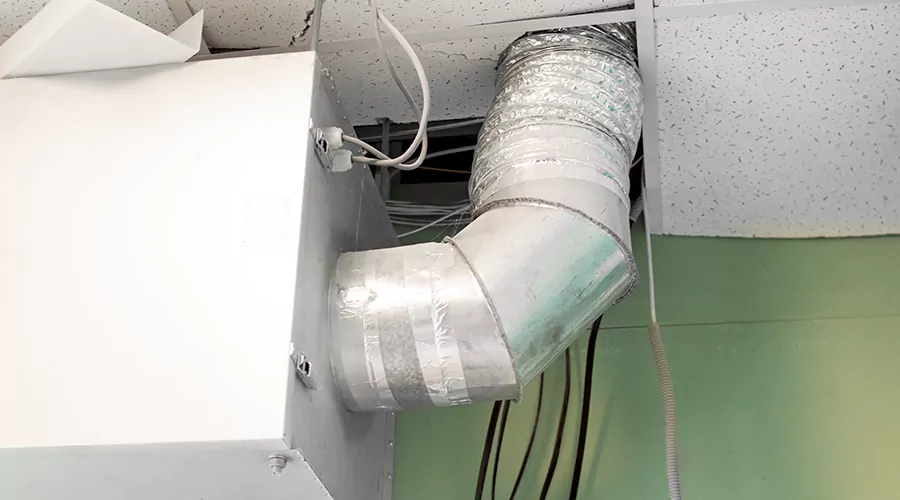
You can repair rusted ductwork by identifying the moisture source and determining whether the affected metal can be restored or needs replacement. Minor surface rust may be treatable when the duct remains structurally sound, while corrosion that has created holes or weakened the metal often requires patching or section replacement. In 2026, professional rust-related duct repairs commonly cost $200 to $500 for limited damage.
Metal air ducts distribute heated and cooled air throughout a home. Although galvanized sheet metal is designed to resist corrosion, moisture can eventually damage its protective coating. Rust may develop around seams or areas where condensation repeatedly collects. Once corrosion progresses, it can weaken the duct and create openings that allow conditioned air to escape.
The correct repair depends on how deeply the corrosion has affected the metal. Light surface discoloration is different from a duct that has developed perforations or crumbling edges. Identifying the cause before repairing the damage helps prevent the same rust problem from returning.
What Causes Air Ductwork to Rust?
Rusted ductwork develops when steel duct surfaces remain exposed to moisture and oxygen. Condensation is a common cause, particularly when cold ductwork passes through humid spaces. Water leaks and damaged insulation can also keep metal surfaces damp long enough for corrosion to develop.
Condensation on Cold Duct Surfaces
Condensation occurs when humid air contacts a surface colder than its dew point. During air conditioning operation, supply ducts can become significantly cooler than the surrounding air. If the ducts are poorly insulated, water droplets may form on the exposed metal and collect around seams.
Repeated condensation gradually affects areas where the protective metal coating is damaged or thin. Rust may first appear as small brown patches before spreading across the surface. Correcting the temperature and moisture conditions is necessary because removing surface rust alone will not stop continuing corrosion.
Water Leaks Near Ductwork
Roof leaks and plumbing problems can introduce water into attic or ceiling spaces containing metal ductwork. Moisture may collect on the upper surface of a duct or run toward the lowest point of a connection. When water remains trapped near seams, corrosion can develop even if the HVAC system itself operates correctly.
A duct affected by a building leak may rust in one localized area rather than throughout the system. Water stains on nearby framing or insulation can help identify the source. Repairing the roof or plumbing problem should take priority before restoring the damaged duct section.
Damaged or Missing Duct Insulation
Insulation helps protect cold ductwork from unwanted heat transfer and condensation. When the insulation becomes torn or displaced, humid surrounding air can contact exposed metal. This is particularly important in attics where the temperature difference between cooled duct air and surrounding conditions may be substantial.
Damage to the insulation's exterior vapor-retarding layer can also allow moisture to enter the insulation system. Water may then reach the metal surface and remain trapped beneath the covering. Rust hidden under wet insulation can be more extensive than the visible damage suggests.
High Indoor Humidity
High indoor humidity increases the likelihood of condensation when metal surfaces become cold. Laundry activities and other household moisture sources can raise humidity if ventilation is inadequate. Ducts installed in damp basements may also experience repeated exposure to humid conditions.
Maintaining indoor relative humidity around 30% to 50% is a useful general target for many homes. However, managing humidity alone may not correct rust caused by an active plumbing leak or damaged insulation. The moisture source should be identified based on the conditions around the affected duct.
Damaged Protective Coatings
Galvanized steel ductwork contains a zinc coating that helps resist corrosion. Scratches and damaged edges can expose underlying steel to moisture, particularly around cut openings or improperly handled connections. Once the protective layer is compromised, rust can develop on the exposed metal.
Small areas of surface rust do not necessarily mean that the entire duct needs replacement. However, corrosion becomes more concerning when it spreads beneath adjacent coating or reduces the strength of the metal. The condition of the surrounding surface determines whether treatment is practical.
How Can You Tell if Ductwork Rust Is Minor or Severe?
The severity of duct rust depends on whether corrosion is limited to the surface or has weakened the metal itself. Light discoloration on an otherwise sound duct may be manageable. Perforations and flaking metal suggest that the material has deteriorated beyond a simple surface treatment.
A visual inspection can identify obvious signs of damage, but rust may extend beneath insulation or around concealed seams. Avoid pressing hard against heavily corroded sections because weakened metal can break or create sharp edges. Assessing the surrounding material is more useful than judging the size of the visible stain alone.
| Rust Condition | What It Means | Possible Response |
|---|---|---|
| Small surface rust spots | Coating has deteriorated locally | Evaluate treatment and moisture correction |
| Rust around a sound seam | Moisture has affected the joint | Inspect and reseal if suitable |
| Flaking corrosion | Metal surface is deteriorating | Assess remaining metal strength |
| Small perforation in sound metal | Corrosion has created an air opening | Patch if surrounding material supports repair |
| Multiple rust holes | Widespread metal deterioration | Replace affected duct section |
| Rust beneath wet insulation | Moisture may be trapped against metal | Remove damaged insulation and assess duct |
| Severely weakened metal | Duct may no longer support reliable repair | Replace affected material |
A section with many pinholes may be in worse condition than a larger area showing only light discoloration. Corrosion that has penetrated the steel affects the duct's ability to remain airtight. This is why patching decisions should consider material strength rather than simply covering the most visible opening.
What Are the Warning Signs of Rusted Ductwork?
Rust can remain unnoticed when metal ducts are concealed above ceilings or behind walls. In exposed areas, early corrosion may appear as small discolored spots near seams or water-damaged insulation. More serious symptoms develop when the metal begins weakening or allowing air to escape.
Look for these 10 warning signs:
- Reddish-brown corrosion develops on exposed metal duct surfaces.
- Rust repeatedly appears around the same joint after cleaning.
- Moisture collects on or around the affected duct during cooling.
- Insulation covering metal ductwork remains damp.
- The protective galvanized coating shows visible deterioration.
- Flaking metal or powdery rust collects near a seam.
- Small holes become visible in a previously stained area.
- Air escapes from a corroded supply duct connection.
- Water stains develop on nearby framing or ceiling materials.
- A duct section appears deformed or structurally weakened by corrosion.
These observations do not all indicate the same repair requirement. Surface rust on a solid duct may be treatable, while perforated metal needs a more involved response. Rust associated with recurring water damage should be investigated before any coating or patch is applied.
A musty odor or dark staining nearby does not prove that the duct contains mold. However, wet insulation and water-damaged building materials may require separate investigation because corrosion and microbial growth can share the same moisture source.
How Do You Inspect Rusted Ductwork Safely?
A basic visual inspection can help establish whether corrosion is limited to an accessible metal surface or extends into surrounding materials. The inspection should be performed with the HVAC system switched off when opening covers or examining damaged sections closely. Avoid disturbing unfamiliar older insulation or cutting into concealed ductwork. Our air duct camera inspection service can document conditions inside the duct system when visual inspection is not enough.
Step 1. Locate the Affected Section
Identify where rust is visible and determine whether the duct is part of the supply or return air distribution system. Look for nearby water stains and note whether the corrosion follows a seam or appears across a larger surface. Photograph the affected area before attempting any cleaning.
Make sure the component is actually an air duct rather than a furnace flue or combustion exhaust connector. Exhaust venting requires different repair materials and safety procedures. Corrosion on a fuel-burning appliance's exhaust system should not be treated as an ordinary duct patching project.
Step 2. Check for Moisture
Inspect accessible surfaces for condensation or signs of water intrusion. If insulation around the duct appears wet, do not simply cover it with another layer. Trapped moisture can continue corroding the metal after the surface is hidden.
Record whether dampness appears during air conditioning operation or remains present when the system is off. Condensation associated with cooling may suggest damaged insulation or high surrounding humidity. Moisture unrelated to HVAC operation may indicate a roof or plumbing leak.
Step 3. Examine the Surrounding Metal
Look for flaking corrosion and small perforations without scraping aggressively. The condition of the metal around a rust spot determines whether surface treatment is suitable. A patch will not remain reliable if the material beneath it is too weak to provide support.
Pay particular attention to connections where separate duct sections join. Water can accumulate around overlapping metal edges and create damage that is difficult to see from one angle. Avoid pulling a heavily corroded fitting apart during the inspection.
Step 4. Check Nearby Connections and Insulation
Examine accessible duct joints for separation or deteriorated sealant. Air leaks can allow unwanted moisture conditions to develop in certain locations. Damaged insulation may also reveal a reason for recurring condensation.
If a connection appears structurally sound but the insulation is wet, moisture correction should occur before new covering is installed. Drying the exterior surface without investigating the underlying metal can conceal additional damage.
How to Repair Minor Surface Rust on Metal Ductwork?
Minor surface rust may be treatable when the metal remains firm and has no holes or significant thinning. The repair involves correcting moisture conditions and preparing the affected surface before using a compatible protective coating. This approach is suitable only when corrosion has not compromised the duct's structure.
Step 1. Turn Off the HVAC System
Switch off the heating or cooling equipment and wait until the blower stops. Work should be limited to safely accessible exterior duct surfaces. Avoid opening electrical compartments or disturbing components associated with combustion exhaust.
Clear the surrounding area before preparing the metal. If the duct is in an attic, assess access conditions carefully because extreme temperatures and unfinished flooring can create hazards. Do not attempt the repair from an unstable position.
Step 2. Identify and Correct the Water Source
Determine whether the rust developed because of condensation or a building leak. A cold metal duct repeatedly exposed to humid air may need improved insulation. A duct wetted by a roof leak requires correction of the building problem first.
Removing rust while allowing the metal to become wet again will not provide a lasting repair. The affected area should be dry before applying any protective coating. Wet insulation must also be evaluated rather than sealed around the metal.
Step 3. Evaluate the Condition of the Metal
Inspect the affected surface for visible holes or deep pitting. Minor surface corrosion can sometimes be treated, but weakened material may not support cleaning or coating. If the metal flakes heavily or has perforations, replacement or an appropriately secured patch may be necessary.
Do not use aggressive power sanding near duct openings or sensitive HVAC equipment. Removing galvanized coating unnecessarily can expose more steel to corrosion. Surface preparation should follow the instructions for the selected repair product.
Step 4. Remove Loose Surface Corrosion
For sound exterior metal with limited rust, remove loose corrosion using a method suitable for the material and protective coating. Work carefully to avoid scratching surrounding galvanized surfaces or spreading particles into the duct opening. Appropriate gloves and eye protection help reduce contact with sharp or loose material.
The objective is to prepare the affected exterior area without weakening the duct. Do not apply household rust removers inside the air passage or allow cleaning chemicals to enter the HVAC airflow. Product compatibility matters because not all coatings are approved for galvanized steel.
Step 5. Apply a Compatible Protective Coating
Once the surface is prepared and dry, apply a corrosion-resistant coating suitable for the duct material and installation conditions. The product should be intended for the surface and follow its required preparation instructions. Exterior metal treatment is different from applying chemicals inside an air distribution passage.
Allow the protective coating to cure according to the manufacturer's directions. The coating helps protect exposed metal but does not restore strength lost through severe corrosion. Any existing air leak must also be addressed using suitable duct repair methods.
Step 6. Restore Insulation and Inspect the Results
If insulation was removed for access, restore it with materials suitable for the duct location. Cooling ducts in unconditioned spaces need insulation with an effective vapor-retarding outer layer to reduce future condensation. The insulation should be dry before it is enclosed.
Inspect the repaired area during later periods of HVAC operation to see whether moisture returns. A dry coated surface is a better sign of successful moisture correction than a temporarily improved appearance. If new rust develops, the underlying water problem may remain unresolved.
How Do You Repair Rust Holes in Sheet Metal Ducts?
A rust hole requires a different repair from light surface corrosion because the air-carrying metal has been perforated. A small opening surrounded by firm metal may support a patch, but extensive corrosion often requires replacement of the affected section. The repair should restore airtightness without restricting the duct's internal passage.
For a localized perforation, a compatible sheet metal patch can be mechanically secured over sound surrounding metal. HVAC-rated mastic is then used to seal the perimeter as appropriate. Sealant alone cannot restore metal that has become thin or brittle because of corrosion.
The patch must be attached to material strong enough to hold its fasteners. If rust extends beneath the proposed attachment area, the repair may fail when the system operates or the metal deteriorates further. Replacing the damaged section is generally more appropriate when solid metal cannot be reached around the opening.
Any patching work should also address the moisture that caused the corrosion. Repairing a hole without correcting condensation may leave neighboring metal exposed to the same conditions. Duct insulation and nearby building materials may need attention before the repair can remain effective.
When Should Rusted Ductwork Be Replaced Instead of Repaired?
Replacement becomes more appropriate when corrosion has weakened the duct or affected a large portion of the material. A patch depends on the surrounding metal being sound, while protective coatings address only surface deterioration. Neither method can restore a collapsed or extensively perforated section.
| Duct Condition | Recommended Approach | Reason |
|---|---|---|
| Light surface rust on firm metal | Treat suitable exterior surface | Structure remains intact |
| Minor corrosion near a sound seam | Repair joint and protect metal | Localized damage |
| Small hole with strong surrounding metal | Mechanically patch and seal | Patch can attach to sound material |
| Multiple rust holes | Replace affected section | Deterioration is widespread |
| Deep pitting and thin metal | Replace affected section | Remaining metal may not support repair |
| Rust under repeatedly wet insulation | Assess metal and replace damaged insulation | Moisture may have caused hidden deterioration |
A corroded main trunk can require more work than a small damaged branch because several rooms depend on its airflow. Replacement should preserve the original duct's required capacity and connections. Installing an improperly sized section can create airflow problems even after the rust has been removed.
Extensive duct replacement should not be based on age alone. An older metal duct may remain structurally sound after decades of service, while a newer section exposed to persistent water can become damaged much sooner.
How Much Does Rusted Ductwork Repair Cost in 2026?
Professional rust or corrosion repairs commonly cost approximately $200 to $500 for limited duct damage in the United States during 2026. More extensive repairs can cost substantially more when the metal has developed holes or sections need replacement. The amount of hidden damage and accessibility influence the final estimate.
| Repair Type | Estimated 2026 U.S. Cost |
|---|---|
| Localized rust or corrosion repair | $200 to $500 |
| Patching a duct hole | $150 to $400 |
| Repairing damaged duct insulation | $200 to $800 |
| Typical ductwork repair project | $200 to $2,100 |
| Replacing a damaged duct section | $400 to $1,500 |
| Condensation-related duct repair | $200 to $900 |
These figures describe different repair categories rather than charges that must be added together. A contractor may include surface preparation and sealing within one repair quote. Additional costs arise when concealed ductwork requires access through finished walls or ceilings.
The condition of the metal can also affect pricing. A small rust spot that has not weakened the duct involves different work from a perforated section requiring a replacement fitting. Correcting the moisture source should be included in planning because otherwise the damage may return.
Can Rusted Ductwork Affect Airflow or Indoor Air Quality?
Surface rust on the outside of a sound metal duct usually has little direct effect on airflow. Problems become more significant when corrosion creates holes or damages duct connections. Supply-side openings can release conditioned air into unintended spaces, while return-side defects may draw unfiltered air into the system.
Rust inside a duct does not automatically mean that large amounts of particles are entering occupied rooms. However, loose corrosion and deteriorated metal deserve attention because the duct may no longer remain structurally sound. The extent of damage should be assessed before assuming that a stained surface requires full system replacement.
Water-damaged insulation can create a separate concern. Persistent dampness may support microbial growth on suitable materials, although rust itself is not proof that mold exists. Moisture investigation is therefore useful even when the visible problem appears limited to corroded metal.
When Should You Call an HVAC Professional?
Professional inspection is appropriate when rust has produced holes or weakened large areas of ductwork. Damage concealed beneath insulation or behind finished materials also requires careful evaluation. These conditions may need sheet metal replacement or airflow testing that cannot be completed through ordinary surface treatment.
An HVAC technician can determine whether the metal remains suitable for repair and identify damaged connections nearby. When significant duct sections must be replaced, the work should preserve airflow capacity and proper support. A qualified assessment can also identify whether condensation or building water leaks contributed to the corrosion.
Corrosion on a furnace flue or combustion exhaust connector requires particular caution. These components carry combustion gases rather than conditioned room air and must not be patched with ordinary duct mastic or foil tape. Suspected exhaust damage should be evaluated promptly because it may create a carbon monoxide hazard.
How Can You Prevent Air Duct Rust From Returning?
Preventing duct rust requires keeping metal surfaces dry and protecting their existing coatings. Condensation control is particularly important around cold supply ducts in unconditioned spaces. Repairing water leaks and maintaining suitable insulation can reduce repeated exposure that damages metal over time.
Maintain Duct Insulation
Inspect accessible cooling ducts for missing or damaged insulation. Insulation helps keep the outer surface from becoming cold enough for condensation, while a properly sealed vapor-retarding layer limits humid air reaching the metal. Repairs should use materials appropriate for the duct location and should not trap existing moisture.
Address Building Water Leaks
Repair roof and plumbing leaks promptly when they affect areas containing ductwork. Check surrounding insulation for dampness and assess whether water has reached concealed metal surfaces. Replacing damaged coverings without correcting the original leak can lead to another corrosion problem.
Monitor Indoor Humidity
Use a hygrometer to track relative humidity and aim for approximately 30% to 50% when practical. Humidity management reduces condensation risks where cold surfaces are exposed to indoor air. Persistent dampness in basements or crawlspaces may require additional moisture control measures appropriate to the building.
Inspect Exposed Metal Periodically
Check safely accessible ductwork during seasonal HVAC maintenance for new rust spots or damaged coatings. Small changes are easier to identify when the same sections are inspected regularly. Photographing a previously repaired area can help determine whether corrosion is continuing.
Conclusion
Repairing rusted ductwork requires identifying the moisture source and evaluating how much metal has deteriorated. Light surface corrosion may be treatable, while perforated or severely weakened sections often need replacement. A lasting repair also addresses condensation or water leaks that caused the rust. Professional assessment is appropriate when structural damage is present. This week, inspect safely accessible metal ducts for rust and moisture staining.